For small businesses, investing in the right training reporting solutions can significantly improve workforce development without adding administrative burden. As learning becomes increasingly data-driven, even smaller organisations need tools that provide clear visibility into employee progress, compliance status, and training effectiveness.
The best training reporting solutions for small businesses strike a balance between automation and simplicity. Platforms such as cloud-based Learning Management Systems (LMS) and lightweight reporting tools provide real-time visibility into employee progress without the complexity or cost of enterprise systems. This makes them ideal for agile teams seeking scalable, data-driven insights.
What Are the Essential Training Reporting Features for Small Businesses?
Core Benefits
Small businesses gain the most value from reporting solutions that are practical, efficient, and aligned with operational needs. Key benefits include:
- Time efficiency through automation of tracking and reporting
- Improved decision-making with real-time data insights
- Compliance readiness without manual record-keeping
- Scalable learning infrastructure as the business grows
Solutions that combine affordability with essential functionality deliver the highest return on investment for smaller teams.
Common Challenges
Despite the benefits, small businesses often face barriers when implementing training reporting systems:
- Limited budget for advanced LMS platforms
- Lack of in-house expertise to configure reporting systems
- Overly complex dashboards that are difficult to interpret
- Disconnected systems (e.g. training data not linked to performance metrics)
These challenges frequently lead organisations to seek external expertise in instructional design and LMS optimisation to ensure systems are configured effectively from the outset.
Supporting Australian Compliance Requirements
Training reporting solutions also support compliance with Australian regulatory requirements, including obligations aligned with Safe Work Australia, industry-specific standards, and audit-ready record keeping. Automated reporting ensures organisations can easily demonstrate training completion and competency during audits.
For a deeper look at how to design training that meets governance and compliance expectations, read our guide on designing training that holds up under governance scrutiny.
What Types of Training Reporting Solutions Are Available?
Small businesses can choose from several types of training reporting solutions, including LMS-integrated systems, standalone analytics tools, and manual reporting templates. Each option varies in complexity, cost, and scalability, making it important to align the choice with business size and reporting needs.
Training Reporting Solutions Comparison for Small Businesses
| Platform | Best For | Key Reporting Feature | Ease of Use | Scalability |
|---|---|---|---|---|
| TalentLMS | Small businesses & quick setup | Built-in automated reports and compliance tracking | High | High |
| Docebo | Growing businesses needing advanced analytics | AI-driven insights and custom reporting dashboards | Medium | Very High |
| Moodle | Budget-conscious teams with technical support | Customisable reporting via plugins and open-source tools | Medium–Low | High |
Not sure which solution fits your business?
Get a tailored recommendation based on your team size, compliance needs, and budget.
Key Features to Compare
When evaluating training reporting solutions for small businesses, focus on features that directly support usability and impact:
- Ease of use: Can managers generate reports without technical support?
- Automation capabilities: Are reports scheduled and distributed automatically?
- Customisation: Can reports be tailored for different stakeholders (e.g. HR, leadership)?
- Integration: Does the system connect with HR, payroll, or performance management tools?
- Analytics depth: Does it go beyond completion rates to measure learning impact and skill development?
Prioritising these features ensures the system supports both day-to-day operations and long-term strategic goals.
LMS Product Comparison for Training Reporting Solutions
| Platform | Best For | Key Reporting Feature | Ease of Use | Scalability |
|---|---|---|---|---|
| TalentLMS | Small businesses & quick setup | Built-in automated reports and compliance tracking | High | High |
| Docebo | Growing businesses needing advanced analytics | AI-driven insights and custom reporting dashboards | Medium | Very High |
| Moodle | Budget-conscious teams with technical support | Customisable reporting via plugins and open-source tools | Medium–Low | High |
- TalentLMS is ideal if you want something ready to go with minimal setup and strong built-in reporting.
- Docebo suits organisations planning to scale and needing deeper analytics and integrations.
- Moodle works best for teams that prioritise flexibility and cost-efficiency but have access to technical expertise.
Need help choosing which Learning Management System best fits your business?
We’ll help you evaluate the right platform and configure reporting that actually drives results.

Key Strategies for Implementation
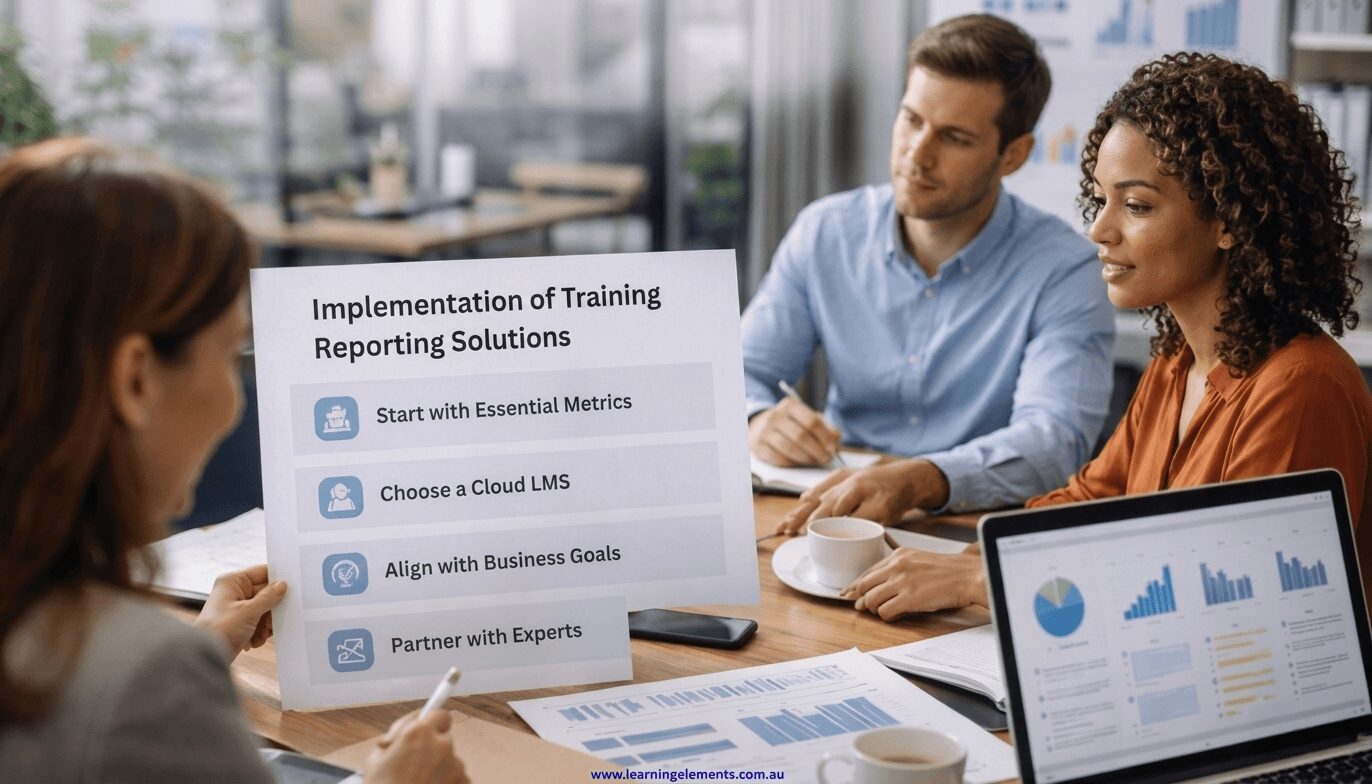
To maximise the value of training reporting solutions, small businesses should adopt a phased and strategic approach:
- Start with essential metrics such as completion rates and assessment scores before expanding into advanced analytics
- Choose cloud-based LMS platforms for flexibility, scalability, and lower upfront costs
- Align reporting features with business objectives, not just training activity
- Partner with experienced providers, such as Learning Elements, to ensure proper system configuration, reporting alignment, and long-term scalability.
In our experience with Australian small businesses, reporting automation can reduce compliance-related administrative time by up to 40%, allowing teams to focus more on learning outcomes rather than manual tracking.
Conclusion
The most effective training reporting solutions for small businesses are those that simplify complexity while enabling scalable growth. By prioritising usability, automation, and clear alignment with business goals, even small teams can leverage data to drive meaningful learning outcomes.
With a robust system supported by a clear implementation strategy, training reporting evolves from a mere administrative task into a powerful asset for organisational development and compliance assurance.
Transform Your Training Reporting Strategy
Ready to move beyond manual spreadsheets and gain full visibility into your workforce training? Build a reporting framework that scales with your business.